Showing posts with label food. Show all posts

Monday, May 20, 2013

The Mocajete (Part I)

So... my husband has been asking me when I will be posting to my blog again.  About the third time he asked this, I figured that maybe he had a point and that I should stop hoarding all the pictures that I have for posts that I plan to do "one day" and instead I should actually post something.

Like today.

So today I would like to introduce you to a new way of making salsa.  Well, it is new for most people I know.  But actually it is the oldest way (that I know of) to make salsa.  Anything involving volcanic rocks is pretty old-school in my opinion.

So of what am I speaking of?  Any guesses?


I am of course talking about the Mocajete!  You do have one lying around your house, right?  I mean what house would be complete without one?  I will admit that after receiving this Mexican version of a mortal and pestle as a wedding gift, it took nine months and a trip to Oaxaca before I could persuade myself to start using it.  It just looked hard and difficult and, well, the blender method is so much easier.  And my mother-in-law uses the blender ~ she is a great Mexican cook, so the blender is the way to go, right?  Alright, in reality she also uses the mocajete a lot, too.

I think what finally convinced me was that on our trip to Oaxaca I realized that mocajetas are not that hard to use and it really does not take that long.  And I realized that my husband had a point when he said that certain salsas made in the mocajeta are more delicious than those made in the blender.   (Trust me, some salsas, like those made with dried chiles, are way better to do in the blender.  No one wants to labor over the mocajete trying to turn dry, papery chiles into a creamy salsa.)

It was really in Oaxaca in the house of my husband's great-aunt that I saw that both options, the blender and the mocajete, have different but very important roles in salsa-making.  So I would encourage you to try both.

Now... getting back to the mocajete....

Once you have your brand-new and lovely mocajete you need to season it before you can use it for making salsa.  Anyone like eating little bits of volcanic rock?  No?  Then we need to knock all those bits off the inside of the mocajete so we have a nice, smooth surface to make our salsa.

The basic technique of seasoning a mocajete is to grind rice (or salt or raw garlic) in the mocajete until the rice stops turning grey.  My husband very kindly was the one who did the grunt work (trust me, this took some some elbow grease) and it took at least five times of going through the process of adding rice, grinding it, and cleaning the mocajete for the rice to stay nice and white after the grinding.  Personally, I think the work passed quickly for him as he was dreaming about all the delicious salsa I would make for him once he was done. 

People will do all sorts of things for delicious salsa.

Which reminds me of a story I think I related once about my Mother-in-law's amazing salsa... in which my brother-in-law´s wife told me that one of the reasons she was interested in my brother-in-law was due to his mom´s salsa.

See?  Learn to make great salsa and who knows what will happen.

Once you have your lovely mocajete, rinse it off and add about 1/4 cup of rice in the center.  You might want to also add about a tablespoon of water as well.


Start the grinding process
Grind until the rice has turned into a grey powder


Clean out the rice and repeat until the rice is no longer turning grey.  Then you have your nice mocajete ready for use!

A couple of notes:
1) I used rice for this process, but you can also use salt or garlic cloves to give more of a "flavor" to your mocajete.
2) I read that in the US you can buy really cheap "mocajetes" that are made out of concrete rather than volcanic rock.  These are only good for decorations and should not be used to prepare salsa.  The reason is that even if you repeat this process 10 times, you will still have grey rice and if you make salsa in them, the salsa will be gritty.

Trust me, the blender method is better than gritty salsa.

Happy cooking!
Kim

Saturday, September 8, 2012

The Amazing, Delicious Tuna Fruit

Welcome to one of my favorite seasons in Mexico: Tuna Season.  And no, I am not talking about tuna-fish, I am talking about the fabulous Tuna Fruit, also called Prickly Pear.  In my mind, right now, it is just about the perfect food here in Mexico - delicious, cheap, nutritious, and available everywhere.  Really, what more could you ask for?

To make this amazing fruit even more special to me, it comes from the same plant as nopales (cactus pads), which I also adore eating.  (If you have not tried nopales, this is my favorite recipe.)

Before I get too carried away about the awesomeness of this fruit, let me show you a photo I took of the tunas still on the cactus.

A cactus full of fabulous tuna fruit
Beautiful "white" tunas for the beautiful price of $0.80 US for 6.6 lbs
The two colors available - purple and white
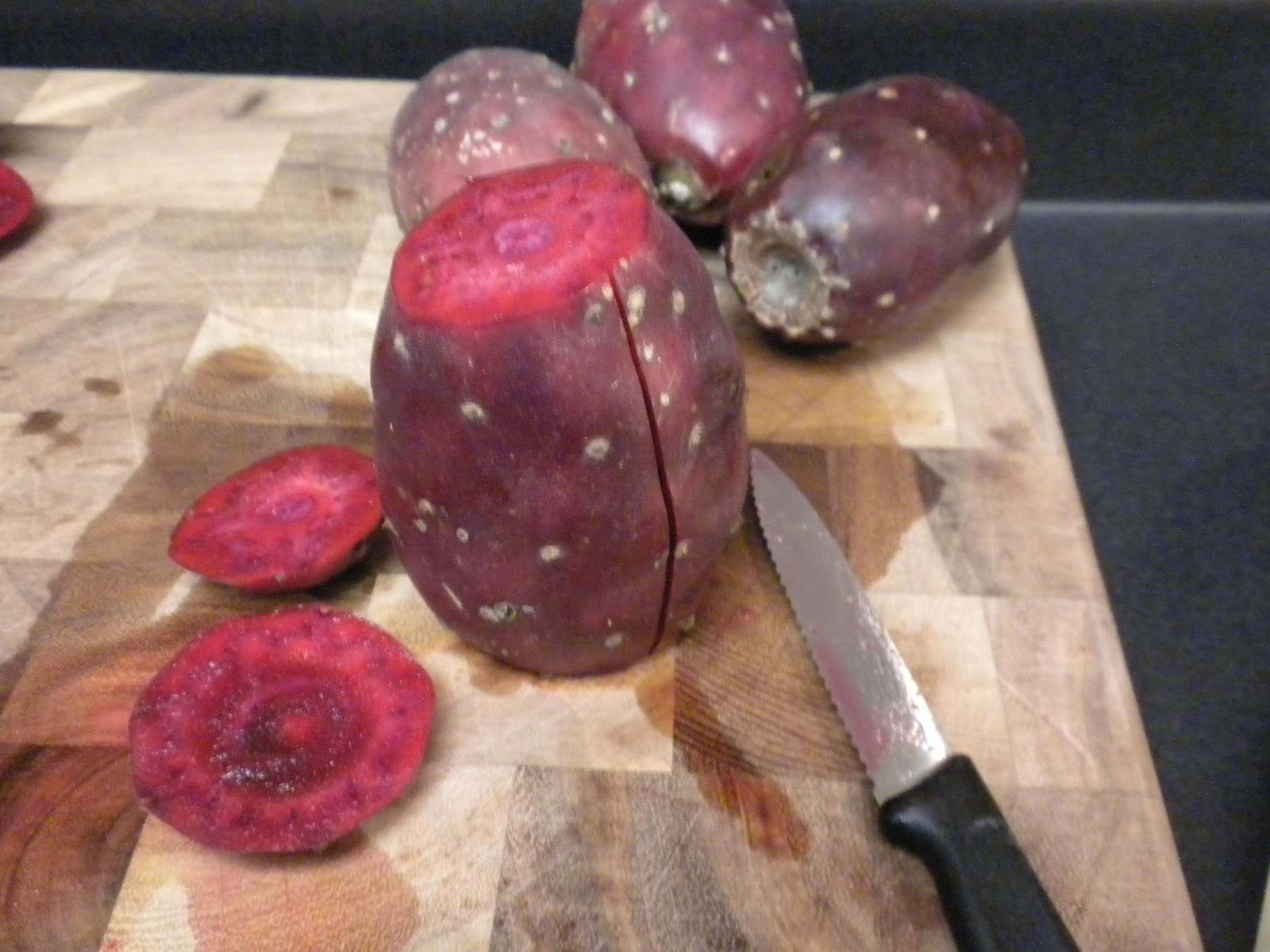
As we usually eat the "white tunas", the name for the tunas with a green peel, this day we decided to buy the rarer and more expensive purple ones.  Both types are delicious and sweet, with the white tunas having a more green, refreshing sweet flavor while the purple tunas have a flavor note reminiscent of beets.  

The flavor of tunas changes sharply according to their ripeness level.  If they are not quite ripe, they are slightly sweet with an acidic edge and, as they ripen, they get progressively sweeter until they remind me of candy.  For the most candy-like "white" tunas, purchase tunas with a yellow-green skin color. 

The texture of tunas is very similar to watermelon, with one important exception, tunas are full of small hard seeds.  As these seeds are too numerous to remove and too hard to chew, in order to eat the tunas, you need to carefully chew the fruit and then swallow all the seeds.  I know of no other fruit like them.


The most important thing to remember about preparing tunas is that they have very small, sharp thorns. I use a glove on the hand that I use to touch the skin on the tuna and an ungloved hand to pull the fruit apart from the peel.

Carefully cut off the two ends of the tuna
Stand the tuna up on one cut end and slice 1/4 in through the peel
Carefully pull the tuna apart from the peel
Lots of tuna peels
Delicious tuna fruit!
I hope that one day you have the chance to enjoy this amazing fruit!  The season here in Mexico in from June to October.   If you cannot find them in the States, feel free to visit me during the season.

Eat deliciously!
Kim

Saturday, May 5, 2012

Mexican Quesadillas (Part 2)

The first time I came to visit my future family in Mexico, I was introduced to the simple deliciousness of a homemade cheese quesadilla.  I never knew something so easy to put together could turn out so amazing.  I would happily eat them for breakfast, a snack, or a light dinner.

When I went back to the US to finish my Master's, I would be intensely jealous of Ismael, when I saw him on Skype with a plateful of these quesadillas.  So please, don't cause relationship problems, make sure to prepare plenty for everyone.

This was actually the first recipe my mother-in-law taught me.  After that lesson, she sent me home with a pound of oaxacan cheese and told me to make them for Ismael.

There is one rather special ingredient that you will need to make these quesadillas.  It is a herb called Epazote, which has a peppery lemon taste that merges well with the cheese.  It takes these quesadillas from ordinary to simple culinary greatness. I have had good luck finding it in Mexican markets in the US, as it is rather important to Mexican cuisine, so I am hopeful you will be able to buy it without too much trouble.  If you want to read more about it, I found this article to be quite helpful.


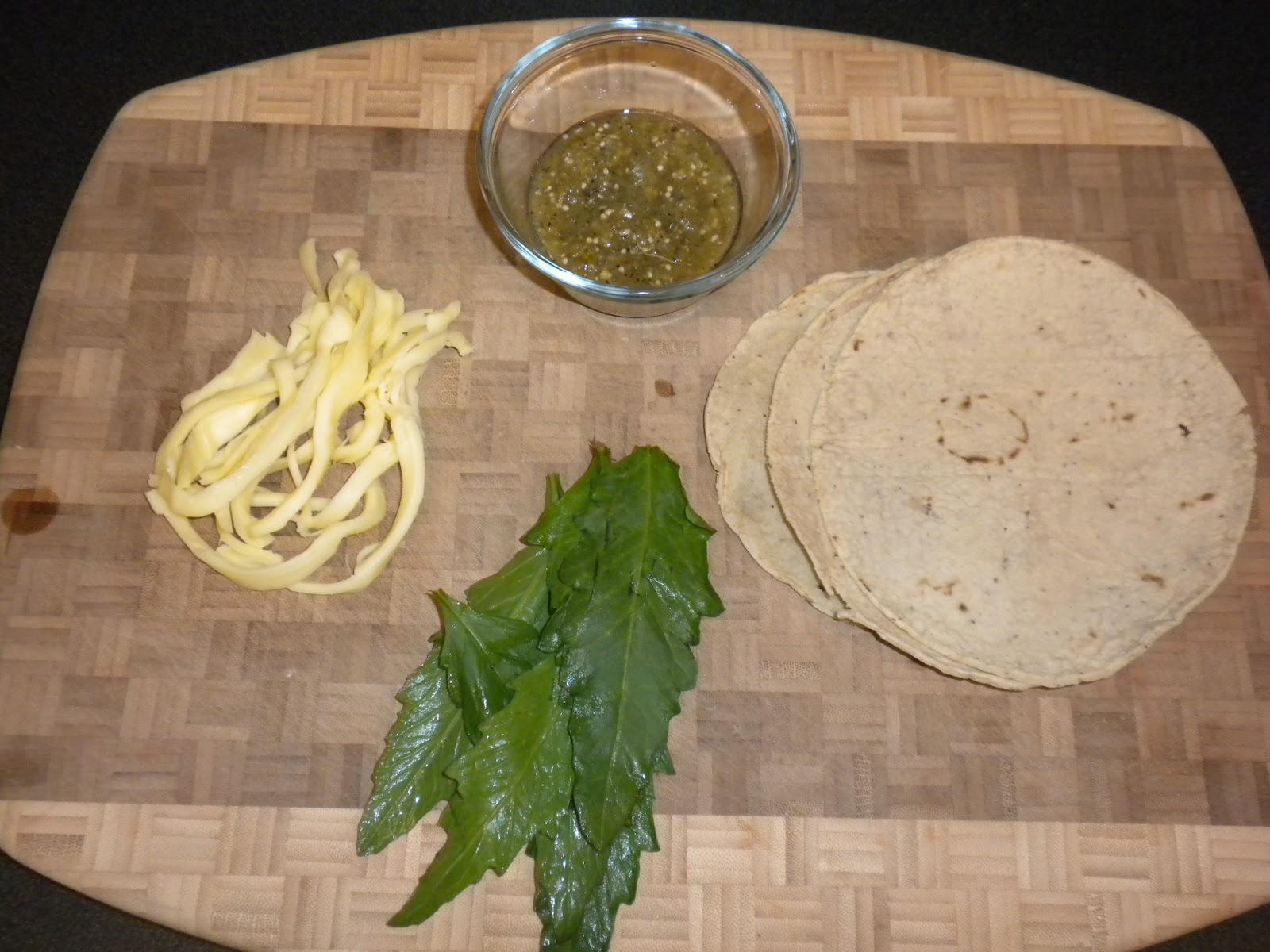
The needed ingredients:
- Epazote
- Oaxacan or Chihuahuan Cheese (in a pinch, Mozzarella or Monterey Jack would work)
- Corn tortillas
- Salsa of your choice (Here I have My Everyday Salsa Verde)


Preheat your comal or large skillet.  Place 1 corn tortilla on the comal and top with 1 large or 2 small epazote leaves and a generous amount of cheese.


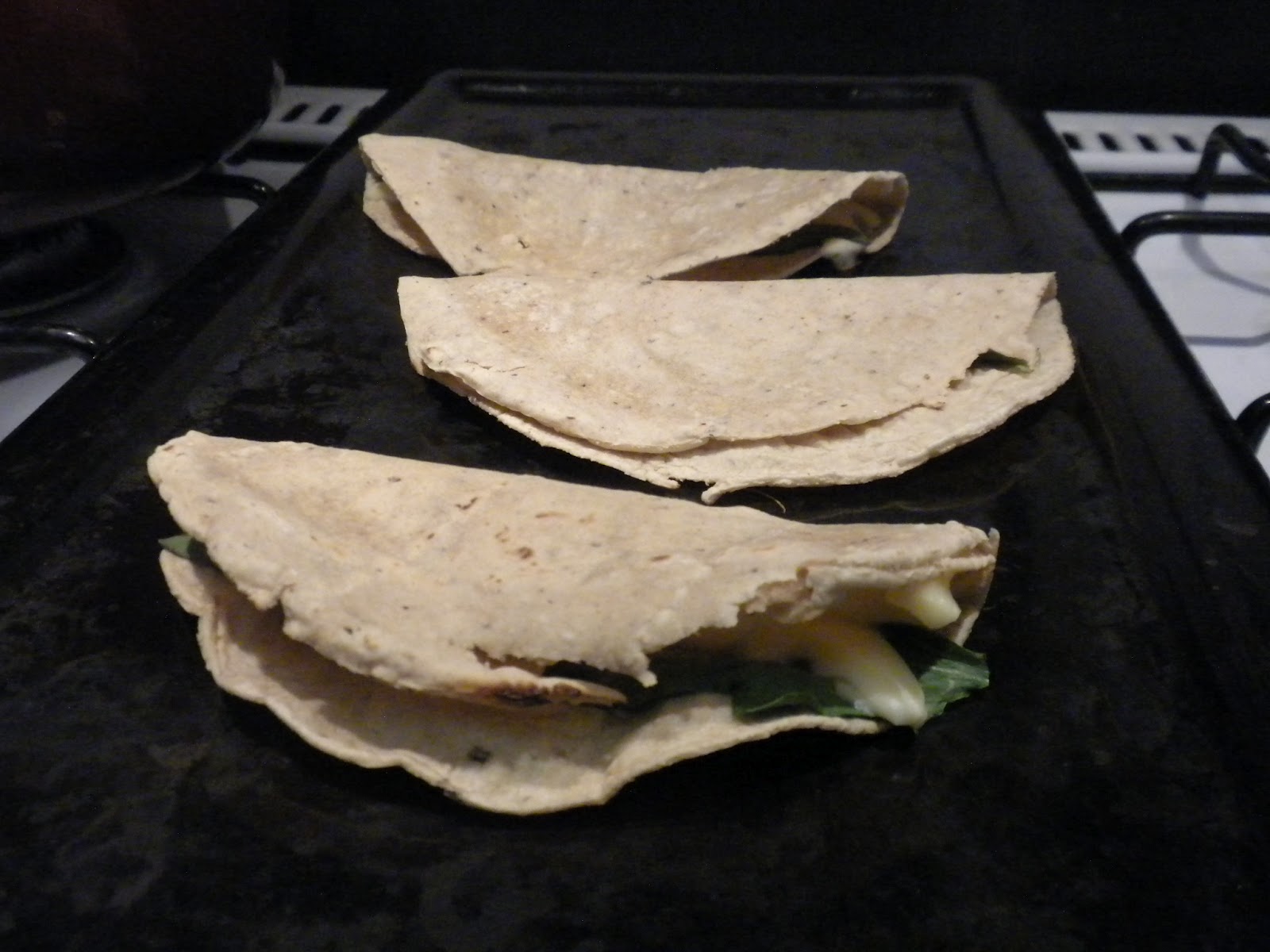
Once the tortillas heat to the point where they are pliable, fold them over and cook, turning them over as needed, until the cheese is nicely melted and the tortilla is slightly crisp.


Move to a serving platter and add your favorite salsa.


Don't be fooled be the simplicity of this recipe.  These are amazing!  I think it would be worth your time to find the Mexican cheeses - they have a slight acidic tanginess which is missing in American-style cheeses. And as you will need to go to a Mexican market for the epazote and the corn tortillas, it is not really out of your way to pick up some nice cheese as well.

Happy quesadilla eating!
~ Kim

Wednesday, May 2, 2012

Licuados - The Mexican Milk Shake

I have to say that I am ridiculously excited about sharing this recipe.  Liquados are easy, cheap, versatile and amazing delicious - which explains why they are available on every street corner in Mexico City.  You really have no reason not to made one!

I personally like to refer to them as "Mexican Milk-shakes" because they are rich, creamy and their main ingredient is typically milk (although juice or horchata are sometimes used instead).  It as if a milk-shake became literal, rather than being the "ice-cream shake" that it is.

Licuados are principally made of your choice of fruit, milk, and sugar to taste.  Almost any type of fruit will work: mango, guava, banana, papaya, cantaloupe, strawberry, etc, but banana is my current favorite.  I think that is because it goes so well with the two secret ingredients: vanilla and cinnamon.  These will take your drink from ho-hum to addictive.

First you, of course, need to gather your ingredients along with a trusty blender.

For 1 pint you will need:
- About 1 cup (not packed) of your choice of fresh fruit (mango, peach, apricot, banana, strawberry, mango, papaya, etc.)
- Milk (about 1.5 cups)
- Sugar (1-3 TB to taste)
- A few drops of vanila (no more than 1/4 tsp)
- A good shake of cinnamon


From watching people make licuados, I have noticed they fill the fruit to about half the total volume of licuado that they want.  For instance, if they want a 0.5 liter of licuado, they fill fruit (including some air pockets) to the 0.25 liter point on their blender.


Add milk to the total volume desired (0.5 liter), 1-3 TB of sugar, a healthy shake of cinnamon, and a splash of vanilla.  Blend 45 to 60 seconds until you have a nice, frothy mixture.  The froth is really important!  Taste and add more sugar, cinnamon, and vanilla as desired - until the flavor is amazing.  (You can also blend in a few ice cubes, if you like.)


Pour into a chilled glass and enjoy!
Kim

Saturday, April 21, 2012

Mexican Quesadillas

I adore the quesadillas here in Mexico.

For me, quesadillas are about the most indulgent Saturday morning breakfast that I can have while living here.  I am sure I liked them in the US, but to be honest, I don't remember them being very exciting - a partly soggy flour tortilla, oozing with cheese, some sort of un-identifiable meat hidden inside, accompanied by a bland tomato-based salsa on the side.  All the ingredients are things I like, but the whole combination did not have the zest that it does here.

Actually, in Mexico I have never seen a quesadilla like those that are served in the US.  The two styles that are available are a deep-fried version that starts off with raw masa and one based on a corn tortilla that is cooked on the comal.

Of course, the ones I go crazy about are the deep-fried version, though I am quite happy to eat the comal version any time Ismael wants to buy me one.

One of the great things about Ismael growing up in Mexico City is that he knows where the best quesadillas are.  In the neighborhood where he grew up, we can find quesadillas with a crispy outside, a generous amount of filling, and bursting with flavor for just $1.25 USD each.  Of course there are some issues, such as this place is a little bit out of the way for us and the lack of seating.  You also have to take into account that this place is popular - there is always a line and they close when they run out of ingredients, so getting here early is a good idea.

A husband and wife team run the business and actually cook the quesadillas while employees prep all the fillings.  The filling choices include picadillo (ground beef with carrots, potatoes, and peas), mashed potatoes with peppers, mushroom, squash flower, shredded chicken, tinga (shredded chicken in salsa), beef, huitlacoche (a mushroom that grows on corn), brain, tuna, and chicharron (fried pork skin in salsa).  You can, of course, choose to have cheese with any other filling for about 8 cents more.


The wife takes the orders (it is best to write out a list to give to her) and makes the quesadillas, while her husband takes the quesadillas through two different fryers, drains them, packs them, and deals with the money.


The wife is amazing to watch as she makes each quesadilla in about 15 seconds.


After the quesdallas are made, they go first into this deep-frier, in batches to help keep the orders together.  Then he moves them to one of the two friers just to the right.  Big pots of hot oil over a gas-flame, like how the other friers are, always make my heart beat a little faster.


Once they are done, the husband drains them, checks their fillings to give each customer the right order, and packs them along with a nice bag of spicy salsa.


Delicious breakfast...

Sunday, March 11, 2012

The Amazing Comida Corrida

I adore comida corrida.

For the past few months, while I have been studying Spanish near my husband's workplace, whenever he asked me what I wanted to eat for comida* (lunch), I would always tell him I wanted to go to my favorite comida corrida restaurant.

Before I get too carried away with the awesome deliciousness of this style of eating, I should explain a few things.  First, comida corrida, literally meaning lunch run, refers to a meal where the courses are brought out successively.  It is more or less the same idea as a fixed price menu (prix fixe), but much cheaper and very, very popular here.

Almost on every street you can find comida corrida places.  Usually they have a sign out advertising their specials or their very inexpensive price ($3 to $8 USD).

Here are a few shoots from my favorite Comida Corrida Restaurant.


This restaurant specializes in coffee, more on that later, and have very strong feelings about fair trade coffee.  So, on the left you can see their "coffee bar."

Agua of the Day: Lime Watermelon
A comida corrida meal typically comes with the fruit water of the day (Aqua Fresca), tortillas or bread, a soup, a rice or pasta, and one main dish, followed by tea, coffee, or dessert.

Here, everyday they serve Chicken Consume and a different soup.  For any broth-based soup in Mexico, I highly recommend adding lime and salsa to taste.  But for a pureed soup, like the one below, we just added some salsa.

Fun fact, in Mexico a creamed soup means pureed, not that a milk product was added to it.
Cream of Bean Soup
 For the rice or pasta dish, I would also recommend adding a little salsa.  It makes it extra delicious.
Rice
For the main courses, there are normally several options, divided among different price points.  This restaurant always has a vegetarian option, as well as, several chicken, meat, and fish options.

Ismael's trusty standby is Carne Asada, while I tend to try something different each time.  This day I had Chicken Thigh in Grape Sauce - an non-traditional but surprisingly delicious take on sweet and salty cooking.

Carne Asada - Grilled Beef

Chicken Thigh in Grape Sauce
Now, we finally, finally made it to the very best part of my meal.   Remember how I said this place was known for coffee?  Well, at the end of the meal you have the choice of dessert, tea, or Cafe de Olla.  Trust me, it is not a hard decision to choose Cafe de Olla everytime (especially since I can persuade Ismael to get the dessert, if it looks good.)

Cafe de Olla is a slight addiction of mine - I am always on the look out for places that are selling it.  It is a traditional type of coffee that is cooked in a pot (olla) with cinnamon sticks and a dark brown sugar called piloncillo. If you like sweet coffee, it is hard to beat a good Cafe de Olla.

Cafe de Olla
Enjoy!
Kim

* I find the word "comida" a bit confusing as it can mean food or lunch.

For those that have to know what the menu said in Spanish...

Menu 2-2-12

Consume (Chicken Soup) or Cream of Bean Soup

Hawaiian Rice or Pasta with Beets

Carne Asada (Grilled Beef)
Muslo en Salsa de Uvas (Chicken Thigh in Grape Sauce)
Cochinita Pibil (Pork)
Tortitas de Ejote (Green Beans and Egg Crustless Quiche)
Milanesa de Pollo o Res (Thin, breaded & fried Chicken or beef)
Pechuga de Pollo Asada (Grilled Chicken Breast)
Strudel de Espinacas (Spinach filled Bread)
Chile Hojaldrano: Queso o Carne (Pepper with Cheese or Beef)
Arrachera (Grilled Beef)
Pescado Asado, Empanizado o a la Menta (Fish Grilled, Breaded or with mint)
Muslo Asado (Grilled Chicken Thigh)

Menu Includes:
- Bread or Tortilla
- Aqua de Sandia-Limon
- Coffee, Tea, or Dessert

Friday, February 3, 2012

The Diet Food of Mexican Actresses

If you have spoken to me recently, you have probably heard me say that the food in Mexico is delicious, but not exactly on the healthy-side.  Sadly, Mexico has now beaten the US for the unfortunate title of having the highest obesity rate in the world.  So in this environment, I want to introduce you to an amazingly delicious and healthy snack (or if you are an actress, a very light meal.)

This snack is immensely popular here (proof of this is that my husband taught me to make it) and it took center-stage in a story related to my by one of my Spanish teachers.  Now, as this story was told to me in Spanish, you will have to be a bit generous with me as I do not have all the details that I would like.  (Or check back with me in about 3 years, I am hoping my Spanish will be amazing by then.)

My teacher and a group of her (teacher?) friends went to a very fancy and well know restaurant here in Mexico City.  As their meal was very delicious, they decided that this would be a great time to have dessert.  After ordering dessert, in walked at least two very famous people.  As they were described to be tall, thin, and very beautiful, I am assuming that they were actresses.  Everyone at my teacher's table was cranking their heads to get a look at these visions of beauty and they were wondering what they would order.  As my teacher's friends found out, the answer to that question was: Water, Cucumber, Carrots, and Jicama.  After seeing that, they very sadly went back to their desserts.

When I first heard that story, I thought that was the saddest meal I had ever heard of.  To go to a fancy, well-known restaurant and eat a meal you could have bought of the street.  But after trying it, I think those actresses were on to something...

Raw Vegetables with Lime-Chili Sauce
- 1 Lime
- 1 Cucumber
- 1 Jicama
- 2 to 4 Carrots
- Dried Mexican Chili Powder for Vegetables (like Tajin)


Assemble your washed ingredients along with a cutting board, knife, peeler, and small bowl
Cut the lime in half and peel the vegetables
If you want to, you can cut the cucumber all fancy as Ismael did
Peel the carrots into nice strips and cut the jicama into thick slices, cutting some into "sticks"
Pour about 1-2 tb of chile into a small bowl, squeeze the lime on top, and mix
Make it look pretty and either dip the vegetables into the sauce or pour the sauce over them.  Enjoy!

Now honestly, when Ismael told me he was going to teach me this recipe - I was not expecting much in the flavor department.  I must say, this recipe completely blew me away.  It was awesome and very addictive.  I had a hard time stopping dipping my jicama in the lime-chili sauce!  Very low in calories (and if you have some nice fresh vegetables), amazing.  My only problem?  No protein.  Which meant that about 2 hours after gorging on jicama, I was hungry again.  Just something to keep in mind...

Enjoy your veggies!
~Kim

Saturday, January 7, 2012

My Everyday Salsa Verde

As I think anyone who visits Mexico (or even a Mexican restaurant) knows, salsa is very important to this cuisine.  In fact, my mother-in-law makes a very special salsa from chilies only grown in her hometown.  This salsa is legendary in the family, so much so, that my sister-in-law claims that that salsa was part of why she originally fell in love with my brother-in-law.  I am hoping that one day my mother-in-law will want to pass on the tradition to me, and when she does, I will make sure to share it with you.

Today, however, I want to teach you the simple, everyday grilled salsa that is so indispensable to my life here in Mexico.  I think it was the second recipe my mother-in-law ever taught me and it is a constant in our house.  Whenever we are getting low, I start planning when I can make the next batch.

The only problem with this salsa is that it was taught to me basically as a technique - I have few hard and fast rules for how much of the ingredients you are going to need.  So the following amounts are more or less correct.  More on that later... (see Notes at the bottom)

Roasted Salsa Verde
Makes about 1 cup
5 Medium Tomatillos (The ones in the pictures are very small)
1-2 Small Serrano Peppers
1 Garlic Clove
Salt (to taste)


Remove the hulls of the tomatillos and wash off their sticky coating.


Assemble your ingredients.  You will also need a blender and comal or skillet (cask iron works well.)


Heat up the comal or skillet and place the tomatillos and serrano pepper(s) on it to grill.


Carefully turn the vegetables over until they are spotted with charred-spots and the color of the tomatillos has turned from green to more of a yellowish color.


When most of the serrano pepper looks charred, remove it from the heat and set aside to cool.


When cool enough to touch, carefully peel off the skin and cut off the top of the pepper.


As the tomatillos soften and become more yellow, remove them to cool.


Place the pepper, garlic clove, and 2 or 3 small tomatillos into a blender.


Blend well.  You want to make sure the pepper is well chopped into the salsa.  Add the rest of the tomatillos and blend to your desired consistency.  Add a nice pinch of salt.  Taste the salsa and add more salt if needed.


Pour the salsa into a bowl for serving.


Here is a typical breakfast at our house - two eggs over easy with queso, salsa, and lightly salted avocados, all served with warmed tortillas.

This salsa is also my salsa of choice for Sopa de Pasta.

Notes:
It can be difficult to obtain your preferred level of spiciness.  You may want to grill extra serrano peppers and only add them in as needed.  Or if it is too hot, add in more grilled tomatillos.  Just keep in mind that the flavor of the salsa tends to mellow out after being put in the refrigerator overnight - so something that is perfect the day you make it, my be a bit dull the next day.


Also, if your salsa tastes very acidic, you may not have grilled the tomatillos enough - in this case you may want to put the salsa in a pot and simmer it a bit to cook it a little more.

~ Kim